

Australia has one of the highest rates of skin cancer in the world. While regular skin examinations remain the cornerstone of early diagnosis, advances in artificial intelligence (AI) are transforming the way high-risk patients are monitored. Rather than replacing experienced clinicians, AI is providing an additional layer of precision that can help detect subtle changes that might otherwise be overlooked.
At SKEEN, we believe the future of skin cancer surveillance lies in combining advanced technology with expert clinical judgement.
Artificial intelligence has attracted significant attention in healthcare, but it is important to understand its role. AI does not diagnose skin cancer independently, nor should it replace an experienced clinician.
Instead, AI analyses large amounts of imaging data, highlights areas of concern, compares sequential images over time, and assists the doctor in identifying lesions that deserve closer attention. Every result is reviewed and interpreted by a consultant-led medical assessment, where the final clinical decision always remains with the doctor. Technology is most valuable when it complements human expertise—not when it attempts to replace it.
Even the most experienced clinician is limited by human memory and visual perception.
Many patients, particularly those with hundreds of moles, develop tiny changes over months or years that can be extremely difficult to detect during a routine examination. Some melanomas—sometimes referred to as micro-melanomas—may measure only 2–3 mm when they first become detectable. Identifying these subtle changes among hundreds of otherwise similar lesions is a significant challenge.
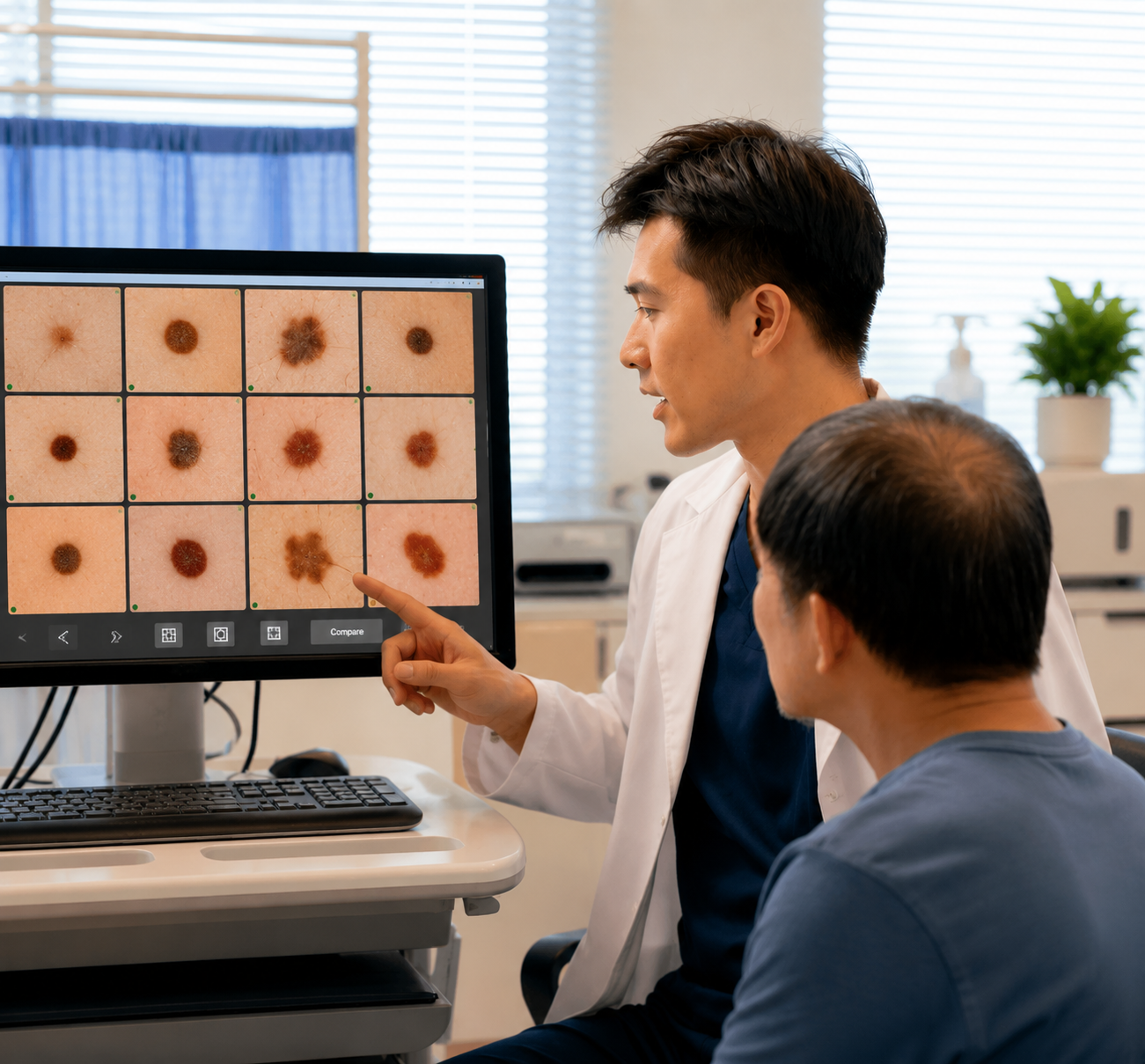
AI excels at recognising minute differences in size, shape, colour and structure that may be almost imperceptible to the human eye. It also remembers every recorded lesion from previous examinations, allowing accurate comparison over time without relying solely on human memory.
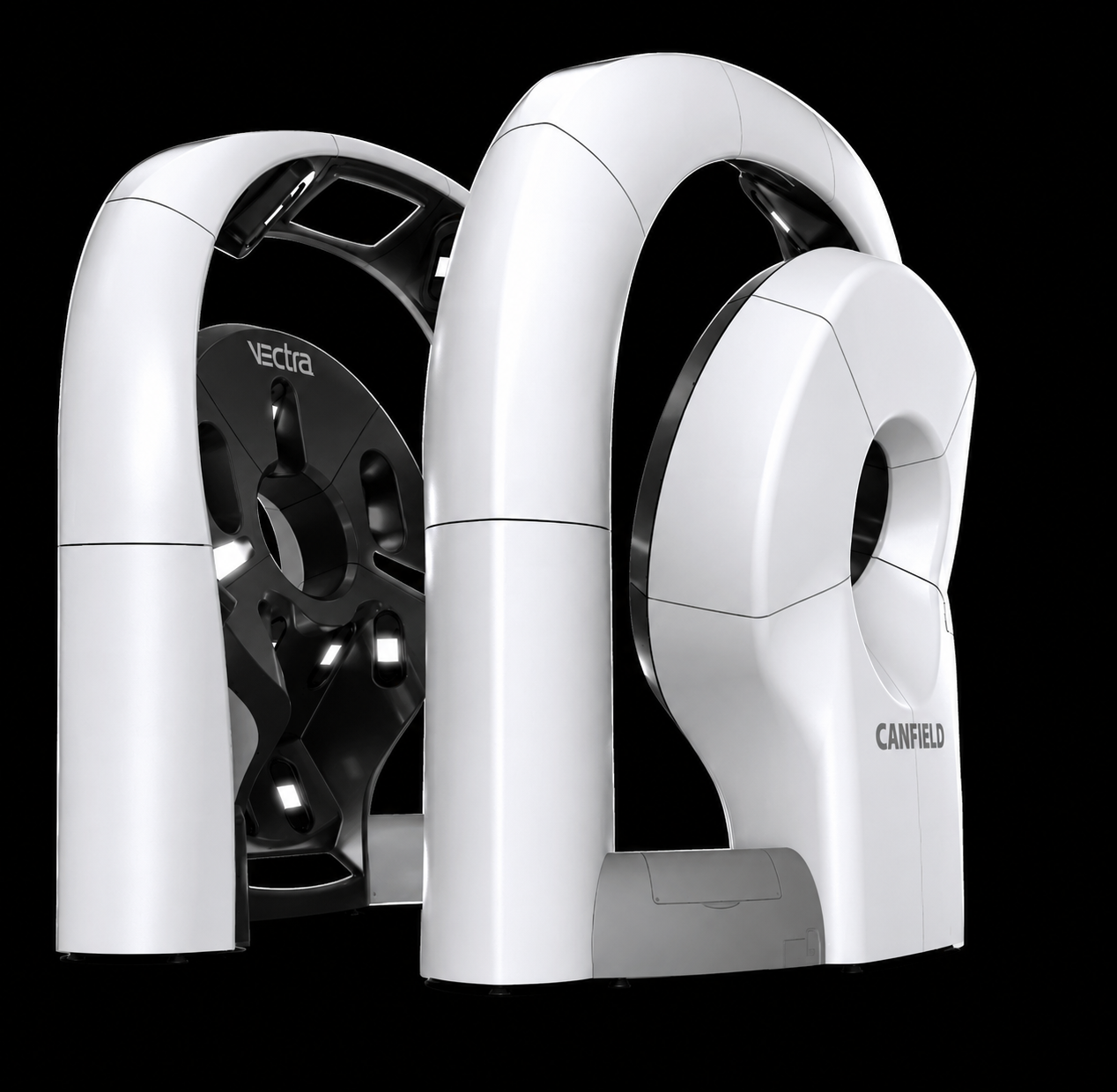
At SKEEN, we use the VECTRA® 3D Total Body Imaging system to create a detailed three-dimensional photographic map of the entire skin surface.
This technology documents thousands of skin lesions in a single examination and provides a comprehensive baseline for future comparison. During subsequent visits, AI-assisted software analyses the new images against previous scans to identify:
Rather than searching the body from memory, the clinician is presented with objective comparisons that make surveillance more accurate and more efficient.
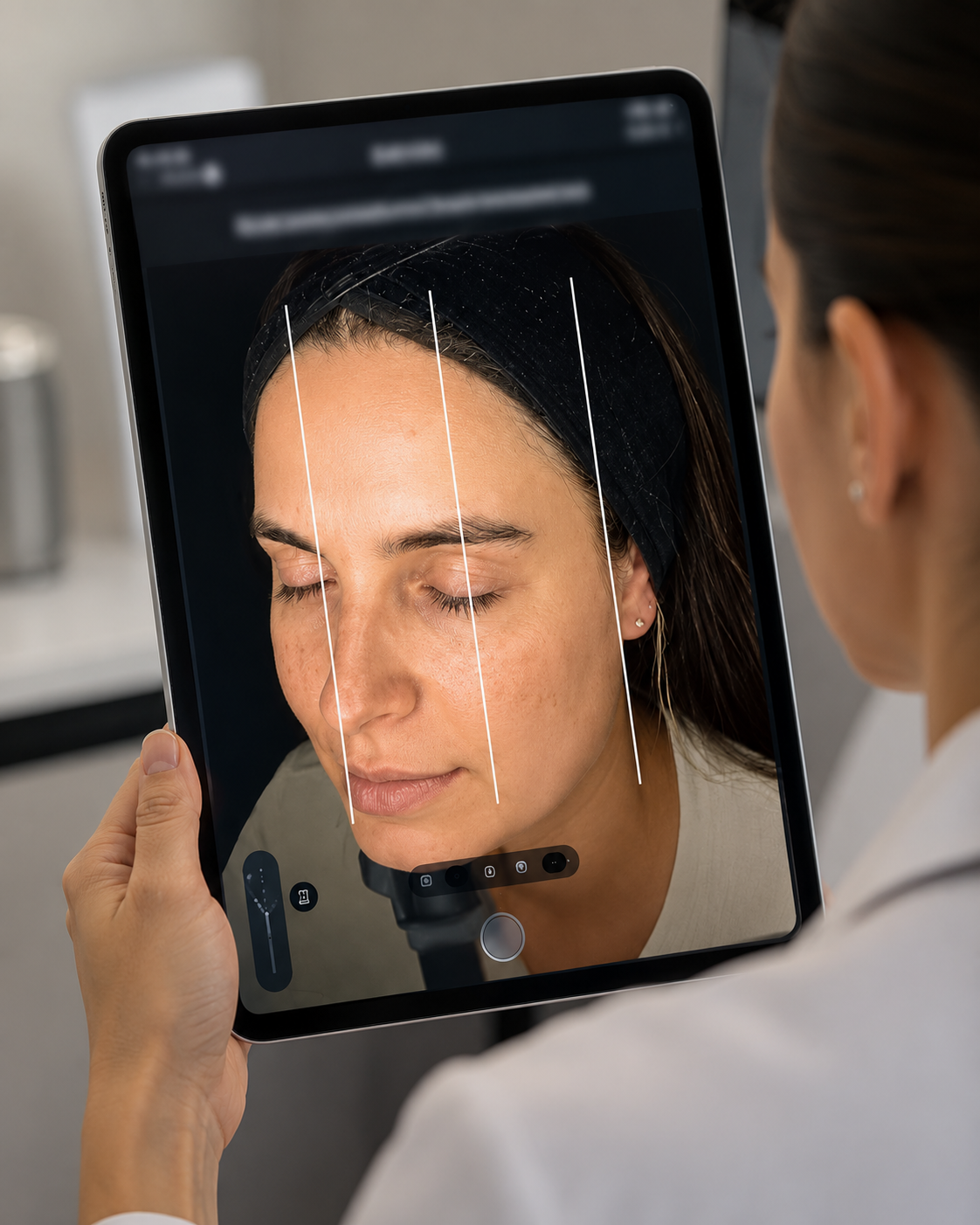
Artificial intelligence also plays an important role in facial skin assessment through the VISIA® imaging system.
VISIA analyses multiple aspects of skin health—including pigmentation, vascular changes, UV damage, texture and ageing features—providing objective measurements that assist in diagnosis, treatment planning and monitoring response to therapy.
As with skin cancer surveillance, these reports are interpreted by an experienced clinician, ensuring that technology supports, rather than replaces, medical judgement.

AI-assisted surveillance is particularly valuable for patients at increased risk of melanoma, including those with:
For these individuals, even a very small change may be clinically significant. Advanced imaging and AI help ensure that subtle lesions are not overlooked and that changes can be tracked objectively over many years.
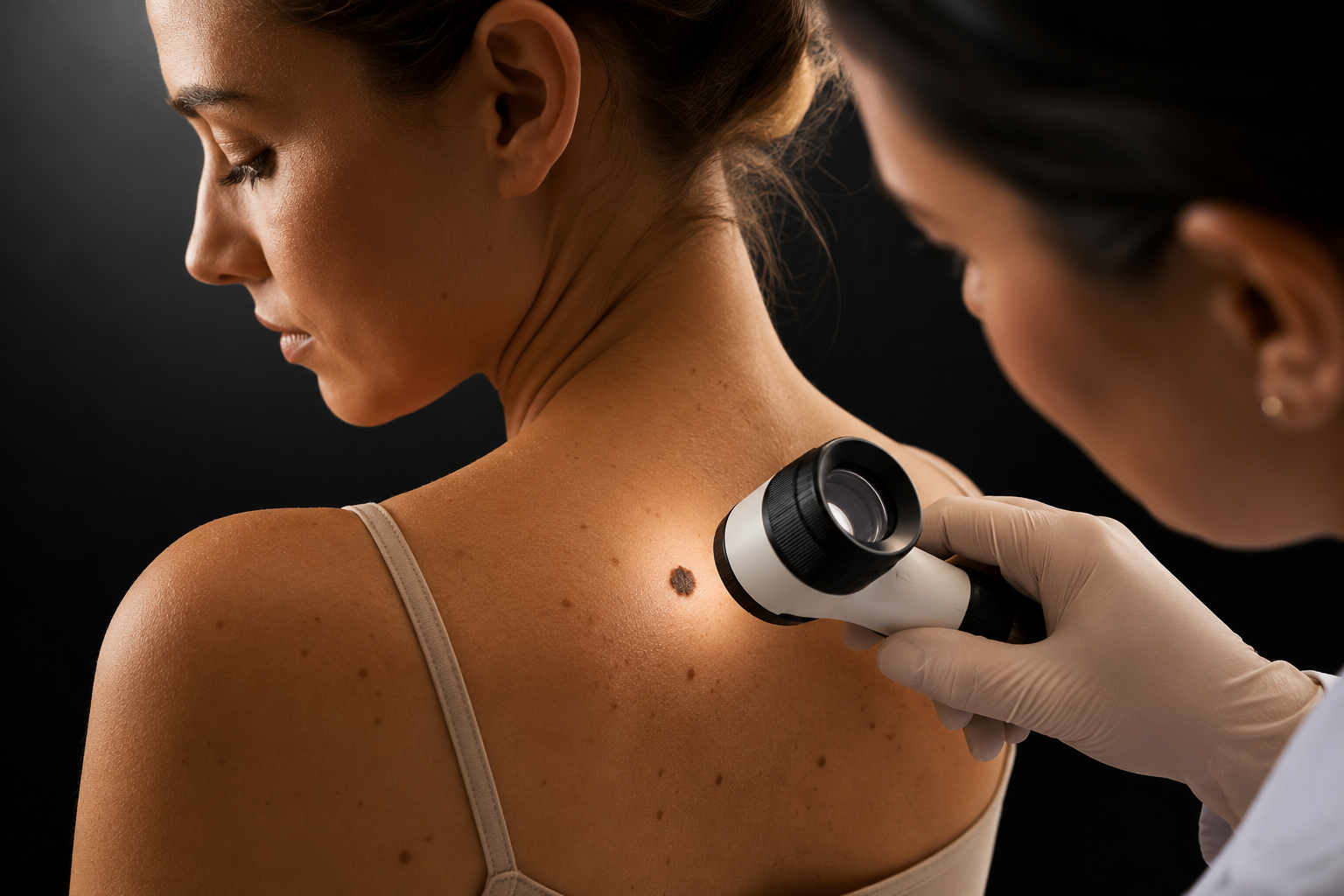
Patients increasingly expect healthcare to benefit from modern technology. AI brings consistency, precision and objective image comparison that simply cannot be achieved through memory alone.
That does not diminish the importance of clinical expertise. On the contrary, technology is most effective when used by experienced doctors who understand when an AI finding is meaningful, when it is not, and when further investigation or biopsy is required.
The future of skin cancer detection is not artificial intelligence versus doctors—it is artificial intelligence working alongside doctors.
By combining consultant-led clinical assessment, dermoscopy, VECTRA 3D total body imaging, VISIA skin analysis and AI-assisted image comparison, patients benefit from both human expertise and advanced technology.
For people at increased risk of skin cancer, this partnership offers greater confidence that even the smallest changes are recognised early—when treatment is most effective
Dr. Colin R McTari
MD, Fellowship in Dermatology
FAID, IFAAS, FSCI, ACAM (Laser)
Dermatology, Cosmetics, and Complex Skin Surgery
Whether you are seeking support for acne, eczema, psoriasis, vitiligo, rosacea, or skin cancer management, SKEEN Clinic offers tailored consultations to guide you through suitable treatment options and personalised care plans.